Improving Indoor Air Quality in Your Newton, MA Home
We spend roughly ninety percent of our lives indoors, yet the air inside a typical home can be more polluted than the air outside it. This guide breaks down what affects indoor air quality in Newton, MA homes and the practical steps, ductwork included, that make the air you breathe healthier.

Indoor air quality, often shortened to IAQ, describes how clean and healthy the air inside your home is. It sounds abstract until you consider what actually floats in household air: dust and dust mites, pet dander, pollen tracked in from outside, mold spores, smoke, cooking particulates, and gases released by everyday products and building materials. In a older, well-sealed New England home, all of that gets trapped inside and recirculated, especially through the long winter months when windows stay shut and the heat runs constantly. The result is that the air indoors can carry a heavier load of irritants than the air on your street.
The good news is that indoor air quality is highly manageable. You do not need to overhaul your home. A handful of consistent habits, the right equipment, and clean ductwork together make a real, noticeable difference, particularly for anyone in the household who deals with allergies, asthma, or respiratory sensitivity.
Common Sources of Indoor Air Pollution
You cannot fix what you cannot name. These are the usual culprits in a Newton home.
Dust & Dander
Skin cells, pet hair, and fabric fibers are the biggest everyday contributors, and they collect fastest inside ductwork.
Mold & Moisture
Humid basements and damp duct runs grow mold that then rides the airflow into living spaces.
Cooking & Smoke
Kitchens and fireplaces release fine particulate that lingers and settles throughout the home.
Pollen & Outdoor Air
Massachusetts pollen seasons push allergens indoors through doors, windows, and return vents.
Household Products
Cleaners, paints, and new furnishings can off-gas compounds that affect the air you breathe.
Dirty Ductwork
Ducts act as a reservoir, holding years of debris and redistributing it every time the system cycles on.

Four Pillars of Healthier Indoor Air
Improving IAQ comes down to four levers you can actually pull. The first is source control, reducing the pollutants at their origin, which includes cleaning your ductwork so it stops recirculating old debris. The second is ventilation, bringing in fresh outdoor air through exhaust fans, opening windows when weather allows, or a mechanical ventilation system. The third is filtration, using a well-rated furnace filter and, where helpful, portable air purifiers to capture what remains. The fourth is humidity control, keeping indoor moisture between roughly thirty and fifty percent so mold and dust mites cannot thrive.
Clean ducts sit at the center of the first pillar, which is why professional cleaning is such an effective starting point. Pair it with a good filter routine from our maintenance tips and you have covered the biggest wins. Curious what the cleaning itself involves? See our step-by-step process.
Improve Your Home's Air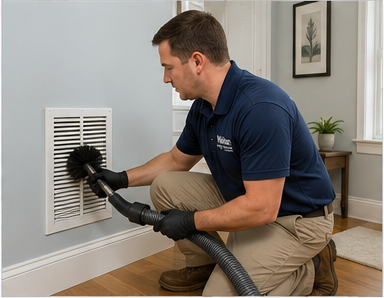
Why Ductwork Is the Heart of Indoor Air Quality
Think of your duct system as the circulatory system of your home. Every room is connected to it, and every particle that settles inside it eventually gets pushed back out into your living space. You can run the best filter and the finest air purifier money can buy, but if the ductwork feeding your rooms is coated in years of dust and mold, you are fighting the problem downstream instead of at the source. That is why a professional cleaning so often produces the fastest, most noticeable improvement in how a home feels and smells.
Waban Home Air Service uses HEPA-filtered source removal to physically pull that reservoir of debris out of your system, giving your filters and purifiers a clean slate to maintain. Explore our full services or read about the broader benefits of clean ductwork.
See Our Services